


How to Fix "Ozempic Face": Treatments for Facial Volume Loss After GLP-1 Weight Loss

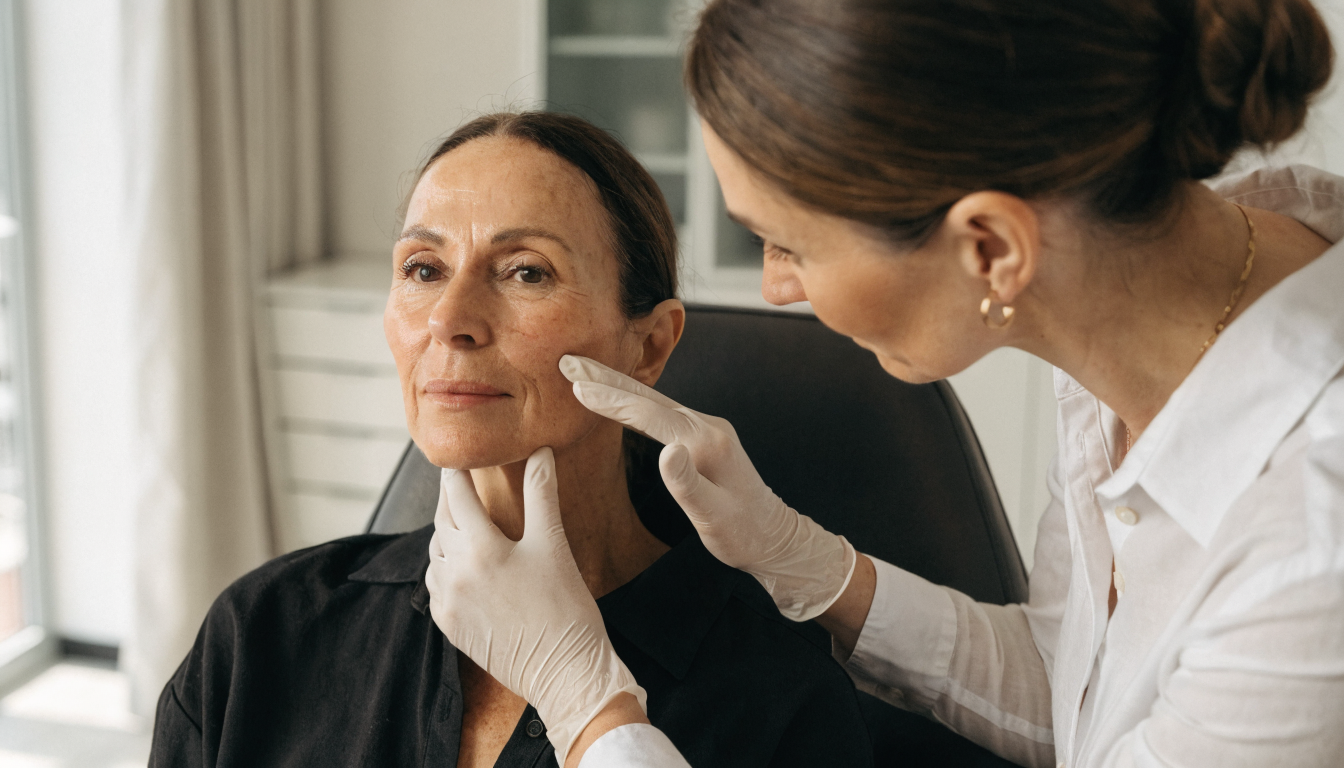
How to Fix "Ozempic Face": Treatments for Facial Volume Loss After GLP-1 Weight Loss
Quick answer: "Ozempic face" is a nickname for the hollow, tired, or older look some people develop after losing weight quickly on a GLP-1 medication like semaglutide or tirzepatide. It is caused by loss of facial fat plus looser skin, not by the drug damaging your face. The most effective treatments combine volume restoration (such as hyaluronic acid or collagen-stimulating fillers) with skin tightening (such as Morpheus8 RF microneedling or Opus Plasma). A provider will usually treat volume first, then texture and laxity.
Losing weight is a big win for your health. But many patients in Sulphur and across southern Oklahoma tell us the same thing: "My body looks better, but my face looks tired." You are not imagining it, and it is very treatable.
What causes "Ozempic face"?
Your face has distinct fat pads that give it a youthful, rounded shape, especially in the cheeks, temples, and under the eyes. When you lose weight, you lose some of that facial fat along with body fat. GLP-1 medications are not uniquely harmful to the face. They simply help people lose a lot of weight, often quickly, which gives skin less time to adjust.
The result can include:
- Hollow cheeks and flattened mid-face
- Sunken temples
- Deeper under-eye hollows and dark circles
- More visible nasolabial folds and marionette lines
- Sagging jowls or a less defined jawline
- Crepey or loose skin on the lower face and neck
Age matters too. After about 30, we lose roughly 1% of our collagen each year, so skin in your 40s, 50s, and 60s does not "bounce back" as easily after weight loss.
Can you prevent Ozempic face?
You cannot fully prevent facial fat loss when you lose weight, but you can reduce how dramatic it looks:
- Lose weight at a steady pace. A provider-guided dose increase helps avoid very rapid loss. This is one reason supervised medical weight loss matters.
- Eat enough protein and strength train to protect muscle.
- Stay hydrated.
- Start collagen-building treatments early, before laxity becomes significant.
- Protect your skin from the sun, which breaks down collagen faster.
Treatments that help
1. Dermal fillers to restore lost volume
Dermal fillers are usually the first step, because they replace what was lost. Common treatment areas for Ozempic face include:
- Cheeks to lift the mid-face and soften folds
- Temples to fill hollowing
- Under the eyes for a more rested look
- Jawline and chin to restore definition
Hyaluronic acid fillers give immediate, reversible results. Collagen-stimulating fillers such as poly-L-lactic acid work more gradually by prompting your body to build its own collagen over time. Curious about longevity? See how long dermal fillers last.
A skilled injector's goal is restoring structure, not puffing up the face. Natural results come from strategic placement and conservative amounts.
2. Morpheus8 RF microneedling for tightening
Morpheus8 combines microneedling with radiofrequency energy delivered beneath the skin surface. It stimulates collagen and elastin, which helps tighten loose skin along the jawline, lower face, and neck. Most patients need a series of treatments, with results building over three to six months.
3. Opus Plasma for texture and fine lines
Opus Plasma uses plasma energy to create tiny micro-channels that trigger collagen production. It is a good option for crepey texture, fine lines, and overall skin quality, with minimal downtime.
4. Microneedling for overall skin quality
Traditional microneedling is a gentler, budget-friendly way to support collagen and improve texture and tone, especially for maintenance.
5. Neuromodulators for lines that stand out more
As volume decreases, expression lines can become more noticeable. Neuromodulators such as Botox soften forehead lines, frown lines, and crow's feet.
What does a typical treatment plan look like?
Every face is different, but a common sequence looks like this:
- Consultation and skin analysis. A VISIA skin analysis can map texture, pigment, and wrinkles so progress is measurable.
- Volume first. Fillers restore the foundation of the face.
- Tighten and resurface. Morpheus8, Opus Plasma, or microneedling improve laxity and texture.
- Maintain. Periodic touch-ups keep results fresh as your weight stabilizes.
Should I wait until I finish losing weight?
In most cases, it is best to start major volume correction once your weight is fairly stable, so your provider is not chasing a moving target. That said, collagen-building treatments like Morpheus8 or microneedling can often begin during weight loss to prepare the skin. Your provider will help you time it right.
Frequently asked questions
Is Ozempic face permanent?
The fat loss itself does not come back unless you regain weight, but the appearance can be significantly improved with fillers and skin-tightening treatments.
Does Ozempic face happen with the Wegovy pill or tirzepatide too?
Yes. It is related to how much and how quickly you lose weight, not to one specific brand or form of GLP-1.
How much filler do I need for Ozempic face?
It varies by how much volume was lost and where. Your injector will recommend an amount after an in-person assessment and may spread treatment over more than one visit.
Will stopping my GLP-1 fix my face?
Not on its own. Stopping the medication often leads to weight regain throughout the body, which is not a targeted fix. Aesthetic treatments address the face directly.
Get your glow back in Sulphur, OK
You worked hard for your weight loss. Your face should reflect how good you feel. Arbuckle Aesthetic Solutions offers weight loss support and facial rejuvenation under one roof for patients in Sulphur, Davis, Ada, Pauls Valley, and throughout Murray County.
Call (580) 403-4040 or book a consultation online. Visit us at 2416 W Broadway Ave, Suite B, Sulphur, OK 73086.
Ozempic® and Wegovy® are registered trademarks of Novo Nordisk. Results vary by individual. This article is educational and not a substitute for individual medical advice.